
Introduction: the tech-recruiting death spiral
For years we struggled to put words to what is wrong with the conventional approach to technical hiring. Below is a diagram that captures the problems of modern candidate sourcing and engineer evaluation in one picture.
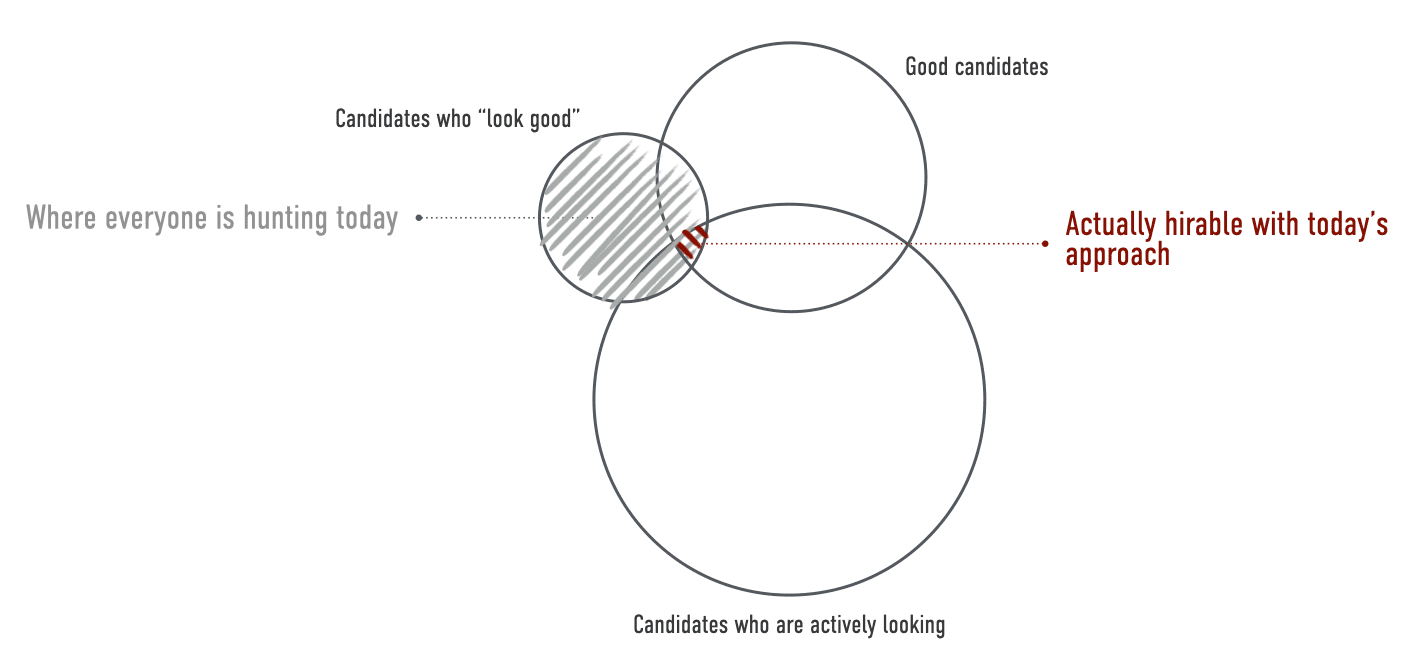
In essence, everyone is chasing the same candidates — the ones who look good on paper. The problem is that many of them are not looking for a job right now, and many are not as strong as they appear. “Pedigree” correlates poorly with real performance.
And today there is still no reliable way to find truly strong candidates. Despite new AI recruiting tools, LinkedIn Recruiter still dominates the market — and it has no “good” filter.
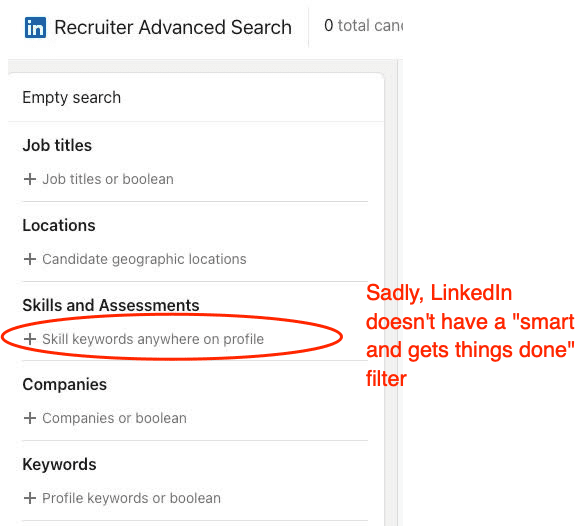
So recruiters fall back on proxies. The most obvious are past employers: the search narrows to FAANG and companies in their orbit (plus a few flashy startups).
When recruiters cannot hire enough people on standard FAANG proxies, hiring managers get frustrated and tighten the criteria. Instead of “from FAANG and top schools,” the req piles on extra filters.
Welcome to the tech-recruiting death spiral.
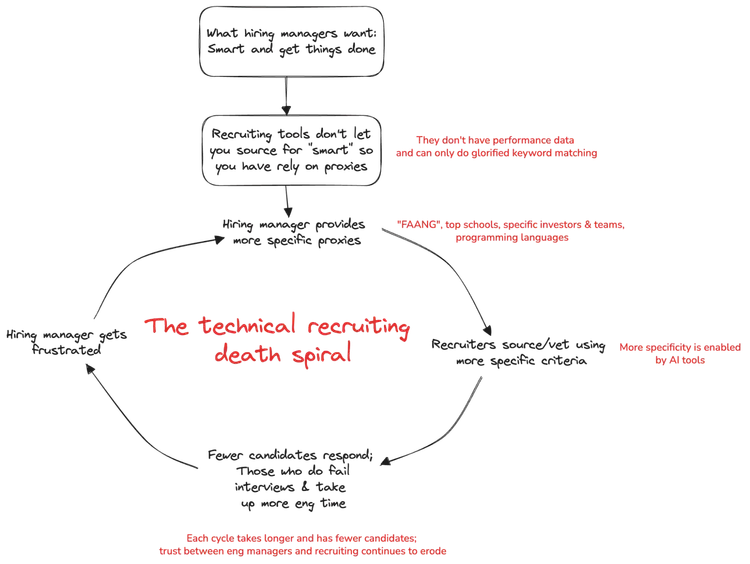
As long as companies stick to this approach, hiring will only get slower, harder, and more expensive. More talented engineers — people who are smart and get things done, easier to hire, and who stay longer — get locked out by ever-narrower criteria.
Modern AI solutions make hiring even worse
Hiring comes down to two things: (1) is the engineer good (“smart and gets results”) and (2) are they looking for a job right now. How do AI tools for candidate sourcing handle those criteria? Short answer: they don't.
The buyers of recruiting tools are recruiters themselves. Their priority is keeping their job by delivering the candidates the manager asks for — even when that defies common sense. That locks the death spiral in place.
If you are an AI tool competing with LinkedIn Recruiter, you will do what the market wants: ever more detailed filters matched to the recruiter's request.
The clearest example of the new wave is Juicebox. Juicebox does AI candidate search. If LinkedIn Recruiter has a competitor, it is them: tens of millions in ARR and a large Series B.
It is good that LinkedIn Recruiter has competition. But Juicebox listens to its buyers (recruiters) and seems to have fallen into the same proxy trap instead of real engineer evaluation.
There are other AI sourcing tools; Juicebox is the most visible, so the focus is here. Almost everything below applies to the rest of the newcomers in technical hiring too.
The core test: can the tool escape the death spiral by finding truly strong engineers (not via proxies) and people open to an IT interview right now?
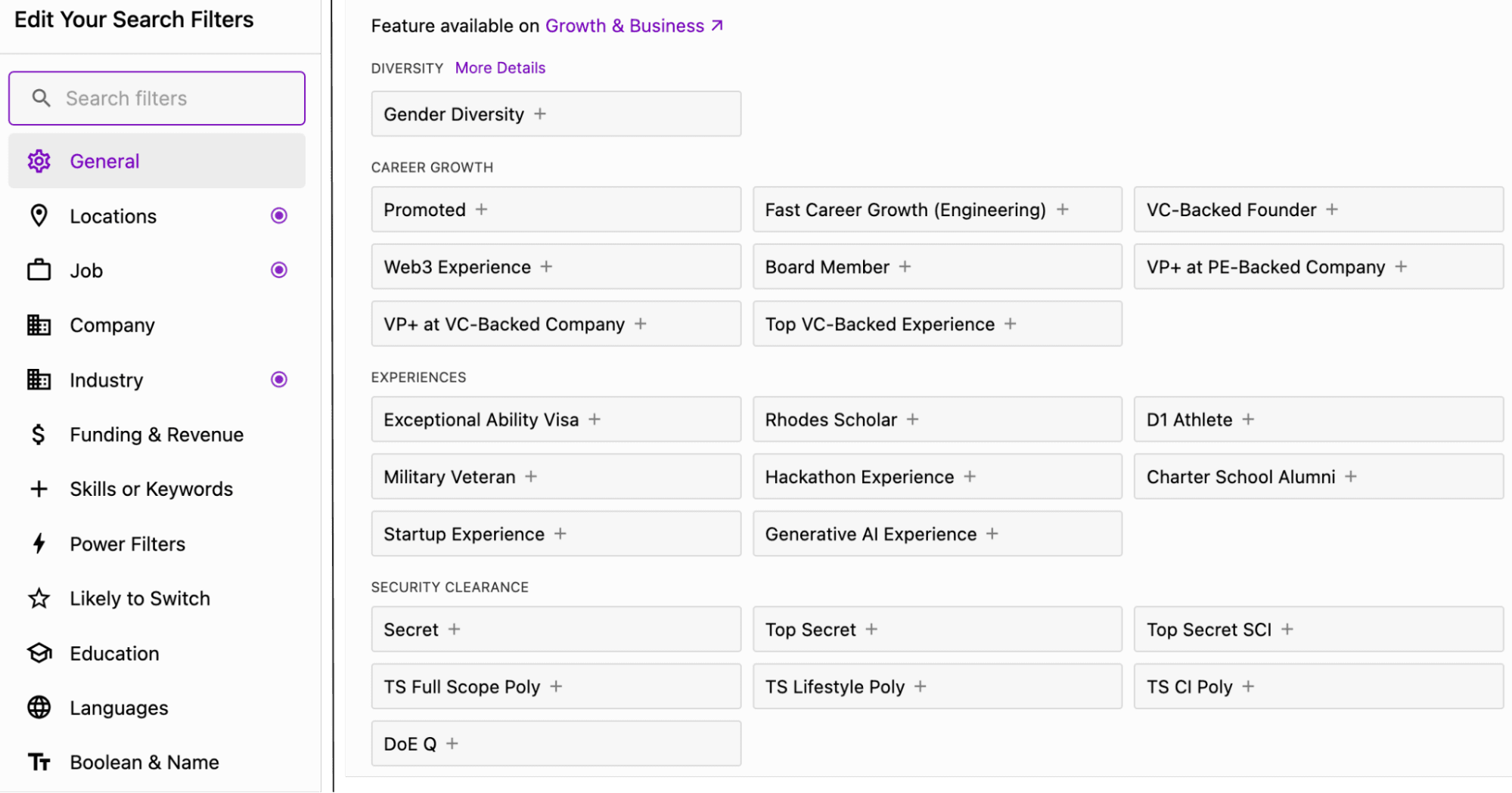
Juicebox filters resemble LinkedIn's, but far more granular. For all that detail, they are still proxies. There is no “smart and high-performing” filter.
Autopilot lets you search for anything. People usually set years of experience, industry, skills. We deliberately tested: can you search for “smart and high-performing”? Answer: no.
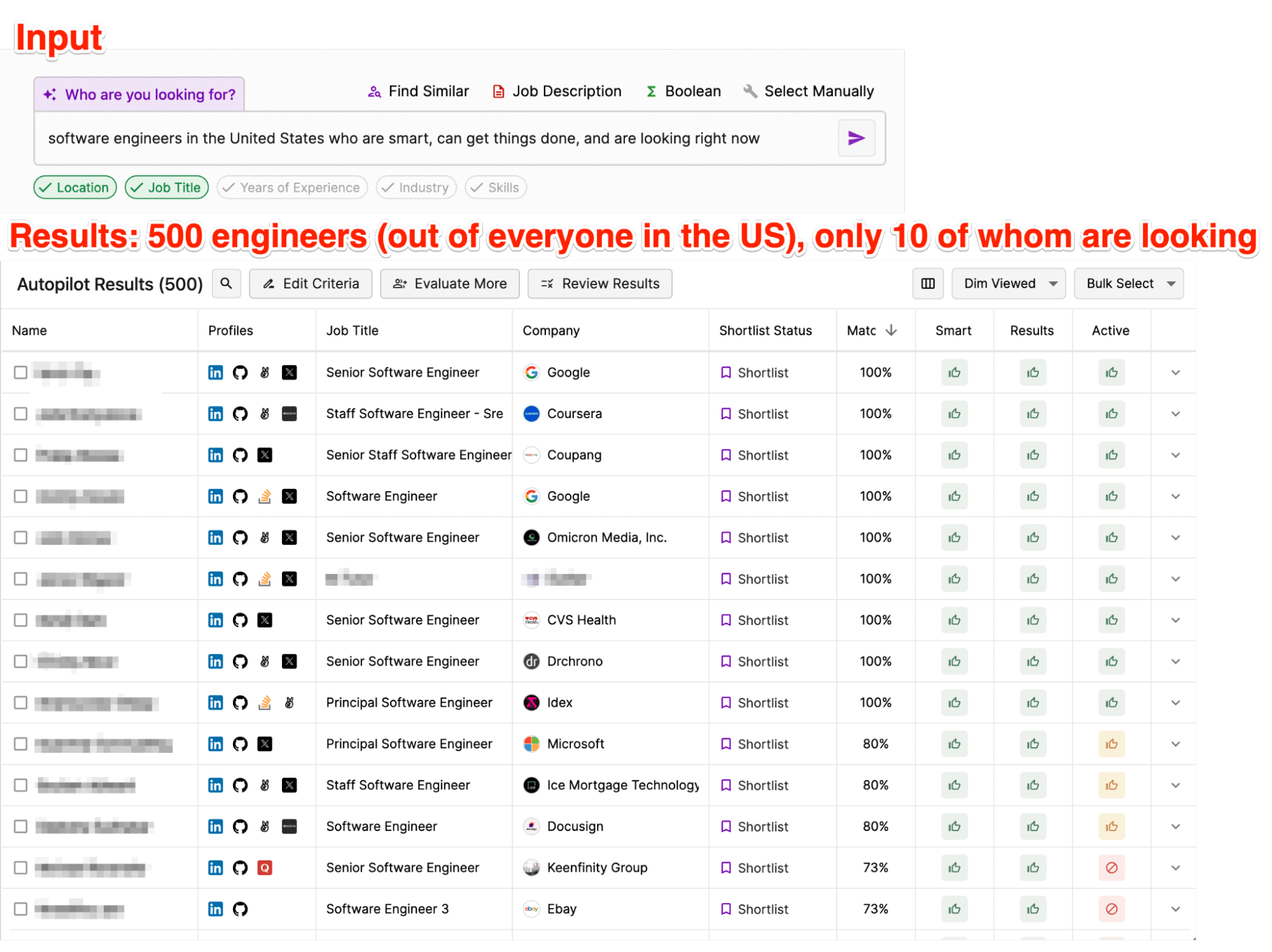
From millions of engineers, the tool returned 500 profiles. Only about 10 were marked “actively looking” — absurdly few for a real hiring pipeline.
AI produced justifications for why candidates were “smart and high-performing.” Without real performance data, the model cannot tell a strong engineer from a weak one — and outputs plausible but empty eloquence.

Most recruiters will use Juicebox's superpower — ultra-detailed filters LinkedIn does not offer. But none of those filters answer whether the candidate is good or looking for work.
How do you break the cycle?
The only way out is to drop the proxies. You need to know just two things: is the person good and are they looking for work. Everything else is noise.
At IT‑Career‑Gym we have both signals: quality through practice and mock-interview results, plus readiness to hire.
- You do not have to use us — any reliable source of “who is good and who is open” improves the industry.
- If you do not have such a source — try the platform: we see how people perform in interviews.
- Past interview performance in aggregate predicts future performance better than brands on a resume.
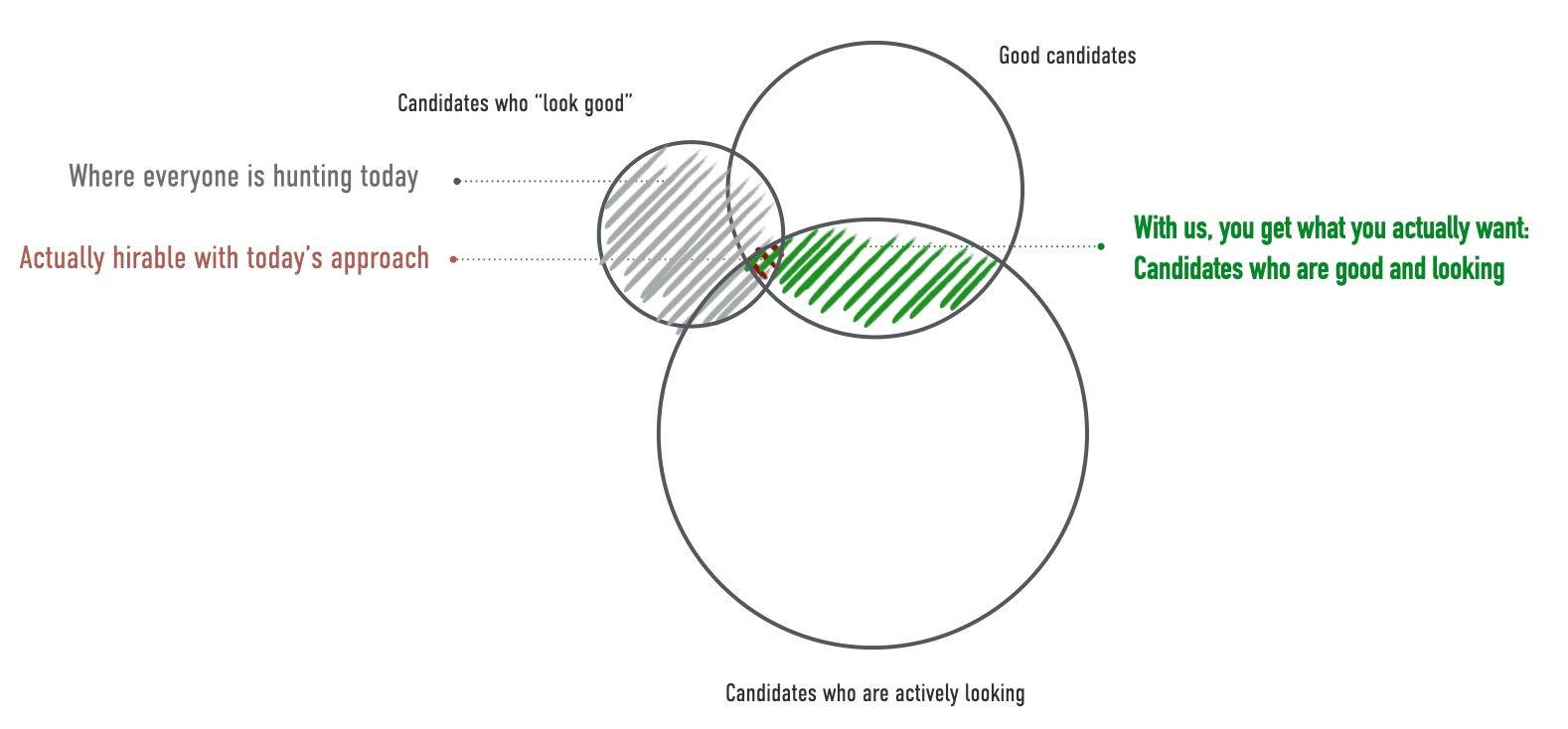
Want to hire from the “green” zone, not the “red”?
Try IT‑Career‑Gym — we know who is strong in practice and who is open to technical hiring right now. Also read our pieces on non-traditional candidates and resume clarity.